Coke Oven Locomotive Interlocking System with Gray Bus Absolute Positioning
The Coke Oven Locomotive Interlocking System is a safety-critical automation platform engineered for the coordinated operation of pusher machines, coke guide cars, quenching cars, coal charging cars, and guide cars in coke oven batteries. It combines Gray-coded cable (Gray bus) absolute positioning, industrial wireless communication, and intelligent interlocking logic to enforce process sequence safety and prevent equipment collisions, red-coke spillage, and misalignment incidents in high-temperature, dusty, and electromagnetically noisy coking environments.
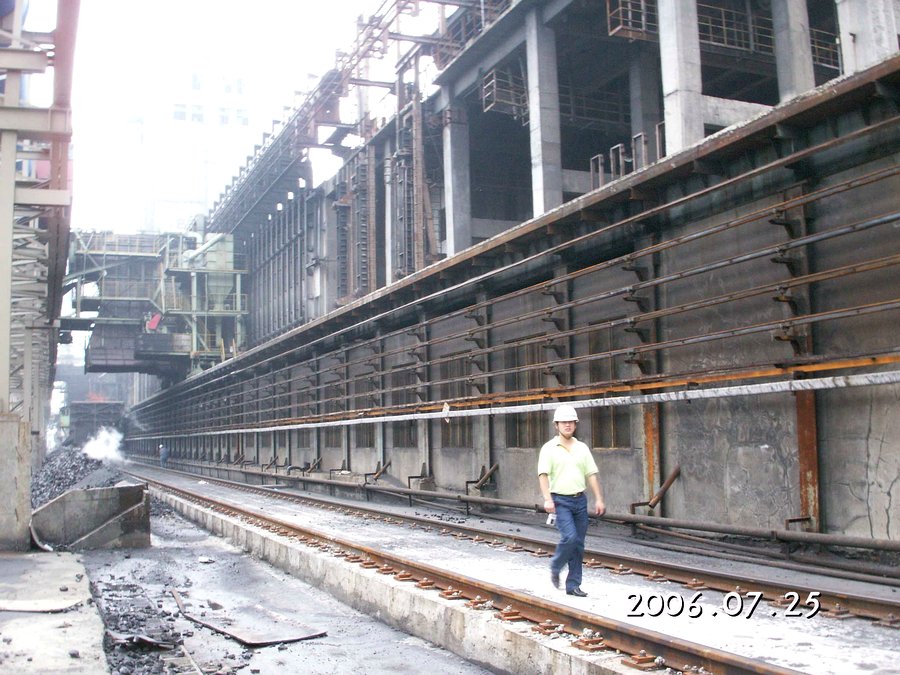
Non-contact absolute positioning immune to coke oven conditions. A Gray-coded cable is laid continuously along the coke oven machinery runway, and each locomotive carries an antenna box that reads its absolute position through electromagnetic induction—no mechanical contact, no friction wear, and no cumulative error. The system retains position data after power interruption and requires no homing or reference-point calibration on restart. Positioning accuracy reaches ±5 mm for main travel, with a resolution of 2 mm, sufficient for precise oven-number alignment and interlocking verification. The cable and antenna box are encapsulated in PVC rubber or nylon-fiber composite materials, rated IP68/IP69, and operate across a temperature range of -30°C to +75°C, withstanding dust, tar adhesion, steam, and high-temperature radiation around the battery.
Hard interlocking logic for the coking process sequence. The system builds a unified position coordinate framework for all locomotives and enforces interlocking permissions based on real-time coordinates and process conditions. Door removal interlock permits the door mechanism to engage only when the pusher or coke guide is aligned with the planned carbonization chamber within tolerance and the current time falls inside the planned pushing window. Coke pushing interlock releases the pushing command only after the pusher, coke guide, quenching car, and guide car have all confirmed alignment at the target chamber, the guide trough is in position, the quenching car door is closed, and the dedusting fan is at operating speed. Coal charging interlock enables charging only when the coal charging car is aligned with the charging port of an emptied chamber and the guide car is in position for effective dust collection. Anti-collision interlock continuously monitors relative distances between locomotives on the same track; when a vehicle enters the warning zone, the system automatically steps down travel speed, and at the safe limit it forces a stop with audible, visual, and touchscreen alarms.
Wireless integration and centralized production management. An industrial spread-spectrum wireless network covers the coke oven area, maintaining real-time synchronization of position and status data between onboard controllers and the ground control center. Ground servers provide centralized monitoring, operation planning, performance management, and interlocking event logging. Onboard touchscreens display each locomotive’s position, interlocking status, and plan instructions to guide the operator. The system integrates with existing PLC, MES, and plant-level scheduling platforms, and supports both new coke oven projects and intelligent retrofit of existing locomotive fleets.